

Pick Your Poison
God provides us with plants that are not only beautiful but also valuable for food, medicine, and many other uses.
Many of the medicinal plants are toxic, or poison, if the wrong amount is used.
In the sets of photos below, one is toxic and the other three are not. Test your knowledge about which one is poisonous.
Don’t make guesses in the real world — be sure before you taste!
Scroll down and find the poisonous flower in each row. See if you can pick which one it is!
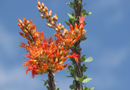 Fouquieria splendens |
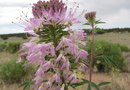 Cleome serrulata |
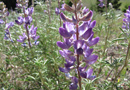 Lupinus argenteus |
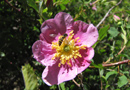 Rosa woodsii |
|
Nope. Sorry. This one is safe.
Sorry, try again.
Not this one.
Poisonous!Lupinus argenteus Although lupines are gorgeous, they are also deadly, with high concentrations of the toxic quinolizidine alkaloids, especially anagyrine. These toxins cause great economic losses from the death of sheep and birth defects in cattle, particularly crooked calf disease, in which the joints are immobile or crooked. The toxins begin to accumulate in the plants during flowering in June through October, with the highest concentrations stored in the seeds, making this stage the most dangerous for livestock. The alkaloid content drops as soon as the pods shatter and drop the seeds. |
|||
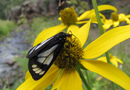 Rudbeckia laciniata |
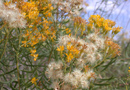 Isocoma pluriflora |
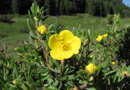 Potentilla fruticosa |
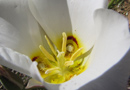 Calochortus nuttalli |
|
Nope. Sorry. This one is safe.
Poisonous!Isocoma pluriflora The leaves are usually sticky with resin, which contains tremetol, a mixture of benzofuran ketones that is toxic to sheep, goats, cattle, horses, pigs, and humans. Consumption of as little plant material as 1 percent of body weight over a one- to three- week period is toxic. The poison causes degeneration and necrosis of the skeletal muscles, exhibited by inactivity followed by muscle tremors when the animal is forced to move. Asymptomatic nursing mothers can pass the toxin through their milk, affecting their young, as well as humans who may drink the milk. Not this one.
Sorry, try again.
|
|||
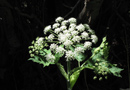 Heracleum maximum |
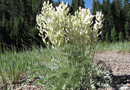 Oxytropis sericea |
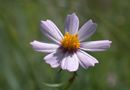 Cosmos parviflorus |
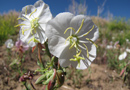 Oenothera coronopifolia |
Poisonous!Oxytropis sericea Of all the plants poisonous to domestic animals, Oxytropis, along with Astragalus, is the most economically destructive to the livestock industry in the western United States. These plants cause extensive reproductive system failures, with cattle and particularly sheep aborting after eating Oxytropis. Most damaging of all is the permanent neurological damage to cattle, sheep, and especially horses. The toxic agent is swainsonine, an indolizidine alkaloid that blocks the enzyme mannosidase, which breaks down the metabolic sugar mannose in cells. As the mannose concentration rises, the damage to nerve cells increases, evidenced by a constellation of neurological symptoms, and becomes permanent. Affected horses are unsafe to ride because they act loco (crazy): they startle easily, and they run into objects because of damage to the optic nerve. Nope. Sorry. This one is safe.
Not this one.
Sorry, try again.
|
|||
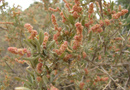 Atriplex canescens |
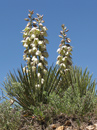 Yucca baileyi |
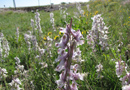 Delphinium wootonii |
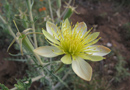 Mentzelia multiflora |
|
Sorry. Try again.
Nope. Sorry. This one is safe.
Not this one.
Poisonous!Delphinium wootonii All parts of larkspur contain poisonous alkaloids and may be fatal to livestock, especially cattle and particularly in the spring, when concentrations of the toxins are at their highest. The poisons become less dangerous as the plant matures. The toxins primarily affect the neuromuscular system, causing falling and difficulty breathing, followed by death in just a few hours. |
|||
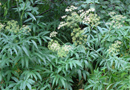 Cicuta maculata |
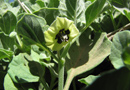 Physalis cinerascens |
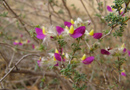 Dalea formosa |
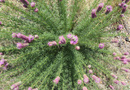 Dalea purpurea |
|
Sorry. Try again.
Nope. Sorry. This one is safe.
Poisonous!Cicuta maculata Water hemlock is native to nearly all of North America and is considered to be one of the most toxic plants in the world, alongside castor bean. Do not taste test any member of the carrot family in the wild unless you are truly an expert in distinguishing one from another. Only a small amount passing your lips is likely to be fatal. The agent of death is cicutoxin, which is present in all parts of the plant at all stages of growth. The roots hold the greatest concentration of this toxin, especially in the early spring. The effects on the central nervous system include convulsions, salivation, and grinding of teeth, followed by death in one to eight hours, for both humans and livestock. In the past, the roots were mixed with rattlesnake venom or decomposed liver to make poison arrows. Not this one.
|
|||
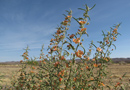 Sphaeralcea angustifolia |
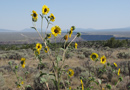 Helianthus annuus |
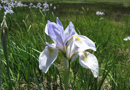 Iris missouriensis |
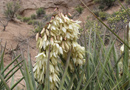 Yucca baccata |
Poisonous!Iris missouriensis Rocky Mountain iris has powerful toxic agents in its rhizomes that cause violent vomiting and diarrhea. The leaves have a similar though milder effect. Both livestock and wildlife avoid it, so populations increase in overgrazed areas. The toxin is the bitter-tasting iridin, a glycoside compound that is a severe irritant to the gastrointestinal tract and skin. Nope. Sorry. This one is safe.
Sorry. Try again.
Not this one.
|
|||
